"Every learner who places their trust in Rich Global becomes our responsibility."

Vilnius University: Masters in Financial & Actuarial Mathematics

Study in Europe Under ₹7 Lakhs: Why Tamil Nadu Math Grads Are Choosing Lithuania ?


Are you wrapping up your B.Sc in Mathematics, Applied Mathematics, or Statistics in Tamil Nadu and asking yourself: “What comes next?”

For years, the standard path for math graduates has been limited to school teaching, government exam prep, or entry-level data analytics roles. But in today’s global economy, your mathematical skills are worth far more—especially in high-income fields like Actuarial Science, Risk Management, and Financial Analytics.

If you’ve dreamed of an international career in Europe without facing overwhelming costs, Lithuania is quickly becoming the top choice for ambitious students across Tamil Nadu.

Why Lithuania is Europe's Best-Kept Secret for Math Graduates?

Located in Northern Europe, Lithuania is a vibrant, tech-forward Schengen Area nation. Studying here means you get world-class European education, a high standard of living, and the freedom to travel across 29 Schengen countries during your breaks.

The Highlights:

Globally Recognized Degree: Earn a European Master’s qualification valid anywhere in the world.
Schengen Access: Experience European culture and build international networks.
Earn While You Learn: Work part-time during your studies to help cover living expenses.
Post-Study Work Visa: Stay back after graduation to step directly into the European job market.

Spotlighting Vilnius University: MSc in Financial & Actuarial Mathematics

Founded in 1579, Vilnius University is Lithuania's flagship institution and a globally ranked academic powerhouse. Their M.Sc in Financial & Actuarial Mathematics is specifically engineered for students who want to apply theoretical math to high-stakes financial environments.

Program Detail Overview:
Degree Title : M.Sc in Financial & Actuarial Mathematics
Duration: 18 Months (Fast-track to your career)
Total Tuition Fee: Approx. €6,000 – €6,600 total (Approx. ₹6.5 Lakhs – ₹7.2 Lakhs total)
Location : Vilnius, Lithuania
Medium of Instruction : 100% English

High-Paying Careers Waiting for You

Financial institutions, insurance giants, fintech startups, and investment banks rely heavily on mathematical models to protect billions in capital. Upon completing this program, you can step into roles such as:

Actuarial Analyst: Calculate risk, design insurance products, and set financial strategies.
Quantitative Financial Analyst: Build algorithm-driven trading models for global banks.
Risk Management Specialist: Help corporations navigate economic shifts and market fluctuations.
Data & Financial Modelling Expert: Turn massive data streams into actionable financial insights.

Who Can Apply?

To qualify for this program, you need:

 A completed B.Sc in Mathematics, Applied Mathematics, Statistics, or a closely related quantitative background.A drive to build an international career in finance and analytics.

Take the First Step with Rich Global Edu

Navigating university applications, document verification, Schengen student visas, and admission deadlines doesn't have to be overwhelming. At Rich Global Edu, we specialize in guiding Tamil Nadu students through every step of their study abroad journey—from selecting the right course to securing your visa approval.

Ready to Start Your European Journey?

Don't let application deadlines pass you by. Connect with our senior education counselors today!
Call / WhatsApp: 90430 33360 | 73388 13379
Direct Message: DM "MATHS" on Instagram or WhatsApp for instant program details!
Partnering with You: Rich Global Edu – Your Study Abroad & Work Abroad Partner

The Hidden Advantage of Studying MBBS in Kazakhstan That Most Students Don’t Know

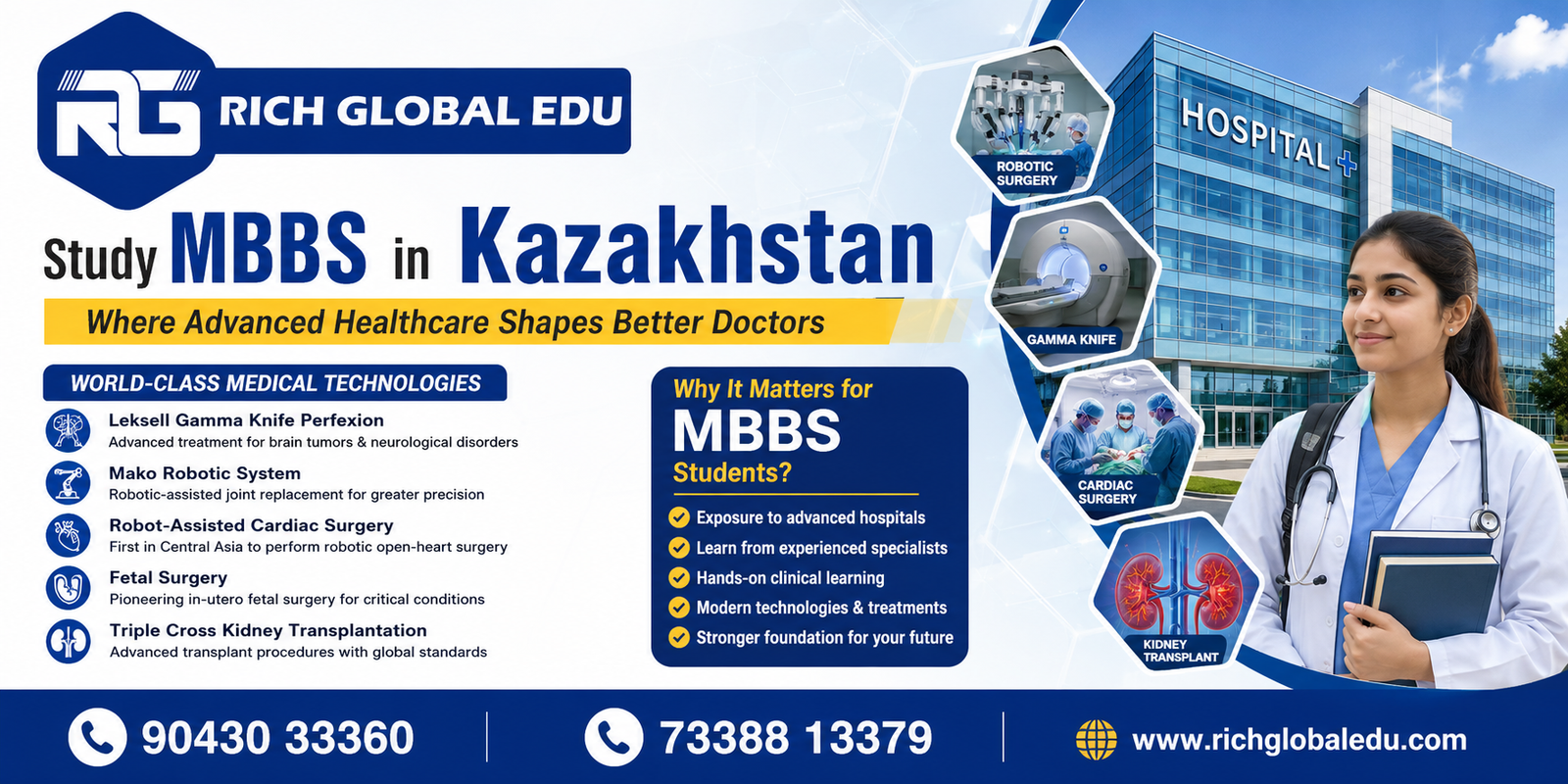
MBBS in Kazakhstan banner showcasing advanced healthcare technologies including robotic surgery, Gamma Knife treatment, cardiac surgery, kidney transplantation, modern hospitals, and clinical training opportunities for international medical students.

Why Kazakhstan’s Healthcare Development Matters for MBBS Students

Many students focus only on university rankings or tuition fees when choosing a country for MBBS abroad. However, one of the most important factors is often overlooked:

How advanced is the country’s healthcare system?

After all, medical education does not happen only inside classrooms. Future doctors learn from hospitals, experienced clinicians, advanced medical technologies, and real patient cases.

A Rapidly Developing Nation with Strong Infrastructure

Kazakhstan is the largest country in Central Asia, the 4th largest in Asia, and the 9th largest country in the world by land area.

With one of the region’s strongest economies, Kazakhstan has invested heavily in modernizing its healthcare sector over the past two decades. These investments have contributed to the development of advanced hospitals, specialized medical centers, and high-technology treatment facilities.

Today, Kazakhstan has established itself as a regional leader in high-tech medicine, offering access to more than 80 types of advanced medical procedures across multiple specialties.

Advanced Medical Technologies Available in Kazakhstan

Kazakhstan’s healthcare system includes technologies and specialized procedures commonly associated with medically advanced countries such as India, China, Japan, South Korea, Thailand, and Malaysia.

Some notable examples include:

Leksell Gamma Knife Perfexion

A highly advanced radiosurgery system used to treat brain tumors and certain neurological disorders without conventional open surgery by delivering precisely focused gamma radiation.

Mako Robotic System

A robotic-assisted orthopedic platform used for joint replacement procedures, helping surgeons achieve greater precision and potentially improving patient outcomes and recovery.

Robot-Assisted Cardiac Surgery

Kazakhstan became the first country in Central Asia to perform robot-assisted open-heart surgery, demonstrating significant progress in advanced cardiovascular care.

Fetal Surgery

Kazakhstani specialists were among the first in the region to successfully perform in-utero fetal surgery, a highly specialized field focused on treating selected congenital abnormalities before birth.

Triple Cross Kidney Transplantation

Kazakhstan has demonstrated the capability to perform highly complex triple cross kidney transplantation procedures, reflecting the expertise and sophistication of its transplant medicine programs.

Why Does This Matter for MBBS Students?

The answer is simple.

Medical students do not learn only from textbooks.

They develop clinical skills through exposure to hospitals, patients, specialists, diagnostic equipment, operating rooms, and evolving medical technologies.

When a country invests in:

  • Advanced tertiary care hospitals
  • Robotic surgery programs
  • Neuroscience centers
  • Cardiac institutes
  • Organ transplantation services
  • Modern diagnostic technologies

students benefit from studying within a more advanced clinical ecosystem.

Even if every student does not directly participate in these highly specialized procedures, learning in an environment where such technologies exist provides valuable exposure to modern medical practice and contemporary healthcare delivery.

A Strong Clinical Learning Environment

Kazakhstan’s emphasis on healthcare modernization has created an environment where MBBS students can gain exposure to structured clinical training and modern hospital systems alongside their academic education.

For Indian students planning to return home and practice medicine, studying within a healthcare ecosystem that incorporates advanced technologies and evidence-based medicine can provide an additional educational advantage.

When selecting a country for MBBS abroad, it is therefore important to evaluate not only university rankings and affordability but also the quality of the surrounding healthcare infrastructure—because the hospitals where students observe and train are an integral part of their medical education.

MBBS in Kazakhstan for Indian Students: Complete Guide

Why Choose Kazakhstan for MBBS? Top 10 Reasons Why Indian Students Are Choosing Kazakhstan in 2026

Introduction

Choosing the right country for MBBS abroad is one of the most important decisions for any student and parent.

With options like Russia, Kyrgyzstan, Uzbekistan, Georgia, Bangladesh, Vietnam, and many others, selecting the right destination can be challenging.

In recent years, Kazakhstan has emerged as one of the most preferred destinations for Indian students pursuing MBBS abroad.

But what exactly makes Kazakhstan attractive?

Let’s explore the Top 10 Reasons to Choose Kazakhstan for MBBS.


1. Strong FMGE Performance

For Indian students, clearing the licensing examination after graduation is one of the most important considerations.

Kazakhstan has recorded an FMGE pass percentage of 51.08%, making it one of the stronger-performing MBBS destinations in Central Asia.

While success ultimately depends on the student’s effort and university choice, this performance demonstrates that many graduates from Kazakhstan have successfully qualified to practice medicine in India.

Why It Matters

  • Better focus on medical fundamentals
  • Growing number of successful FMGE candidates
  • Increasing confidence among Indian students

2. NMC-Compliant Medical Education

Many leading medical universities in Kazakhstan offer MBBS programs that align with current NMC requirements.

Students should always verify:

  • Course duration
  • Internship structure
  • Medium of instruction
  • Clinical training opportunities

before taking admission.

Why It Matters

Choosing an NMC-compliant university helps ensure eligibility for future licensing pathways in India.


3. Affordable MBBS Fees

One of Kazakhstan’s biggest advantages is affordability.

Compared to private medical colleges in India, Kazakhstan offers medical education at a significantly lower cost.

Benefits

  • Affordable tuition fees
  • Budget-friendly accommodation
  • Lower living expenses
  • Better value for money

This makes medical education accessible to a larger number of students.


4. English-Medium MBBS Programs

Most universities offer complete MBBS programs in English for international students.

This allows students to focus on medical education without facing language barriers in academics.

Benefits

  • Easier understanding of medical subjects
  • Smooth transition for Indian students
  • Better preparation for international licensing exams

5. Excellent Clinical Exposure

Medicine cannot be learned only from textbooks.

Clinical exposure plays a crucial role in shaping a competent doctor.

Many universities in Kazakhstan are attached to large teaching hospitals and healthcare networks.

Students Gain Exposure To

  • Outpatient departments (OPD)
  • Inpatient wards
  • Clinical case discussions
  • Bedside teaching
  • Surgical observation

Why It Matters

The greater the patient exposure, the stronger the clinical confidence and practical understanding.


6. Modern Medical Training Facilities

Medical education today requires advanced training methods.

Many universities in Kazakhstan provide:

  • Clinical Skills Laboratories
  • Simulation Centers
  • Cadaver-Based Anatomy Training
  • Digital Learning Platforms
  • Research Facilities

Benefits

Students develop practical skills before interacting with real patients.


7. European Higher Education Area (EHEA) Membership

One of Kazakhstan’s most underrated advantages is its membership in the European Higher Education Area.

The country’s higher education system follows principles associated with the Bologna Process.

Benefits

  • Internationally comparable education structure
  • Academic mobility opportunities
  • Greater international recognition
  • Enhanced educational transparency

This is an advantage many students overlook while comparing countries.


8. International Collaborations and Global Exposure

Many Kazakhstan universities maintain partnerships with institutions across the world.

Collaboration Countries Include

  • United Kingdom
  • Australia
  • Canada
  • South Korea
  • Turkey
  • Lithuania
  • European nations

Benefits

  • Student exchange opportunities
  • Research collaborations
  • International conferences
  • Academic mobility programs

Global exposure is becoming increasingly important in modern medical careers.


9. Convenient Location for Indian Students

Kazakhstan’s geographical location offers several practical advantages.

Benefits

  • Relatively shorter travel time from India
  • Multiple international flight connections
  • Easier travel during holidays
  • Convenient access for visiting parents

Travel convenience becomes an important factor during a six-year medical journey.


10. Global Career Opportunities

An MBBS degree today opens doors to opportunities around the world.

Many graduates pursue:

  • FMGE / NExT (India)
  • USMLE (United States)
  • PLAB (United Kingdom)
  • AMC (Australia)
  • Middle East Licensing Examinations

Why It Matters

Students can build careers not only in India but also in various international healthcare systems.


Why More Indian Students Are Choosing Kazakhstan

When evaluating a country for MBBS abroad, students should focus on:

✔ Academic Quality

✔ Clinical Exposure

✔ Hospital Network

✔ FMGE Performance

✔ NMC Compliance

✔ International Recognition

✔ Student Support

✔ Licensing Opportunities

✔ Career Outcomes

✔ Overall Value for Money

Kazakhstan performs strongly across many of these parameters.


Final Thoughts

Choosing a country for MBBS abroad is not just about finding the lowest fees.

It is about finding the right balance between:

  • Quality Education
  • Clinical Training
  • Global Exposure
  • Licensing Opportunities
  • Career Growth

For many Indian students in 2026, Kazakhstan continues to be one of the most attractive destinations because it offers exactly that balance.

Looking for MBBS Admission in Kazakhstan?

Rich Global Edu

Your Study Abroad & Work Abroad Partner

📞 +91 93452 92880

📞 +91 70945 57469

Get expert guidance on:

  • University Selection
  • NMC Compliance Verification
  • Admission Process
  • Visa Assistance
  • Travel Support
  • Pre-Departure Guidance
  • FMGE & Licensing Awareness

Start your MBBS Abroad journey with informed decisions and the right guidance.

MBBS in Uzbekistan: Fergana Medical Institute Overview

“Are you planning to study MBBS abroad? But confused about which country or which university to choose? Then this information is for you…

Uzbekistan is currently becoming one of the most preferred MBBS destinations for Indian students. The climate is almost similar to North India, so harsh winters and extreme snowfall are not major concerns. This makes student life comparatively more comfortable.

More importantly, the practical exposure here is very strong. Students get clinical training through government hospitals and affiliated hospitals. From the early years itself, patient interaction begins. This provides real-time hands-on medical experience and helps maintain a good balance between theory and practical learning.

However, there is one very important point to note. Recently, there have been warnings from the India Embassy / NMC side regarding some Uzbekistan universities. Concerns like quality issues, over-admission, clinical training gaps, and compliance problems have been highlighted.

So what should students do? It is important to check university recognition, verify hospital tie-ups and clinical exposure, and confirm FMGL / NMC compliance. Without proper guidance, admission decisions should not be taken.

In this context, one strong and popular option is the Fergana Medical Institute of Public Health, established in nineteen ninety two. It is a government medical institute with a structured MBBS program, English-medium education system, hospital-based clinical training, and a comfortable environment for Indian students. It also provides strong patient exposure and clinical practice.

Classroom learning is not the only focus here; real hospital exposure helps students develop confident doctor training. A strong balance between theory and practical learning is maintained.

When it comes to clinical exposure, the main university hospital itself has a seven hundred and fifty-bed on-campus teaching hospital. In addition, the Fergana region has a hospital network of more than three thousand five hundred beds.

This includes Fergana City Hospital with three hundred and eighty beds, Emergency Center with three hundred and fifty five beds, Regional Multi-specialty Hospital with three hundred and fifty five beds, Maternity Hospital with one hundred and eighty beds, and Children’s Hospital with one hundred and fifty beds.

Because of this, students get high patient inflow exposure, multiple department rotations, real emergency case handling experience, early bedside clinical training, and strong practical confidence building.

Along with this, there is Indian faculty support and mentoring, English-medium teaching, and FMGE / NExT-oriented guidance.

So overall, in the MBBS abroad journey, the most important factors are correct university selection, proper clinical exposure, verified recognition, and right guidance. Without these, admission decisions should not be made, because your future as a doctor depends on it.”

MBBS in Georgia: Important Licensing and Financial Considerations for Indian Students Under NMC Regulations

MBBS in Georgia: Important Licensing and Financial Considerations for Indian Students Under NMC Regulations

Chennai-based Rich Global Edu urges students and parents to verify licensing pathways before choosing MBBS in Georgia

MBBS in Georgia: Important Licensing and Financial Considerations for Indian Students Under NMC Regulations

As thousands of Indian students continue exploring overseas medical education opportunities, Rich Global Edu, a Chennai-based overseas education consultancy specializing in international medical admissions, has raised important regulatory and financial concerns regarding students planning to pursue MBBS in Georgia.

The concern follows official written replies received from the Medical and Pharmaceutical Activities Regulation Agency under the Ministry of Health of Georgia in response to queries submitted by Rich Global Edu regarding medical licensing eligibility, internship pathways, and junior doctor registration options for foreign medical graduates in Georgia.

According to the official communication received from the Georgian authority, a foreign medical graduate seeking an independent medical practitioner license in Georgia must complete several additional steps beyond the undergraduate medical degree. The authority clarified that an individual must pass the unified postgraduate qualification examination, complete a postgraduate residency program in the relevant specialty, undergo training in an accredited medical institution, and subsequently pass the state certification examination in order to obtain a state medical certificate for independent medical practice.

The authority further clarified that internship-based practice pathways are not defined under current Georgian legislation.

In a separate official reply dated May 8, 2026, the Georgian regulatory agency additionally stated that registration for “Junior Doctors” is not provided for under existing legislation and that such a registration process is not conducted by the agency.

MBBS in Georgia: Important Licensing and Financial Considerations for Indian Students Under NMC Regulations

These clarifications are particularly important for Indian students because the Foreign Medical Graduate Licentiate Regulations (FMGL) 2021 issued by the National Medical Commission require foreign medical graduates to obtain registration or legal eligibility to practice medicine in the country where they complete their medical education before becoming eligible for registration in India.

According to Rich Global Edu, many students and parents considering MBBS in Georgia may not fully understand the long-term licensing requirements involved after completion of the six-year undergraduate medical program.

“Today, many students focus primarily on tuition fees, course duration, and English-medium education while selecting a medical university abroad. However, under current NMC regulations, the licensing pathway in the country of study has become one of the most important factors students must evaluate before admission,” said Raphael Sebastian, Director of Rich Global Edu.

The consultancy also expressed concern that some education agents may be selectively interpreting Clause Reg. 4 (b) of the FMGL Regulations 2021, particularly the phrase “registered with the respective professional regulatory body or otherwise competent to grant license to practice medicine.”

According to Rich Global Edu, this phrase is sometimes being presented to students and parents as though temporary registration or junior doctor eligibility alone may satisfy Indian licensing requirements. However, the official replies received from Georgian authorities indicate that no formal junior doctor registration mechanism currently exists under Georgian law.

Another major concern highlighted by Rich Global Edu is the financial impact on students planning to pursue MBBS in Georgia.

Many Indian students and parents typically plan their overseas medical education budget based on a six-year undergraduate MBBS program. However, according to the official clarification received from Georgian authorities regarding medical licensing requirements, students may also need to complete a postgraduate residency program in order to become eligible for independent medical practice licensing in Georgia.

This could significantly increase the total duration and financial commitment required for students pursuing MBBS in Georgia, including additional tuition fees, living expenses, examination costs, licensing procedures, and residency-related expenditures.

Rich Global Edu emphasized that students and parents should carefully evaluate not only the admission process and tuition structure, but also the long-term licensing pathway and the financial resources required to complete the entire medical qualification process abroad.

Rich Global Edu further noted that the licensing pathway described by Georgian authorities may require completion of both undergraduate and postgraduate medical education before obtaining full independent licensure, potentially extending the total education duration beyond nine years.

This raises important questions regarding the feasibility of completing the entire qualification and licensing process within the timelines contemplated under India’s FMGL Regulations 2021.

Rich Global Edu has advised students and parents planning MBBS in Georgia to:

  • Verify licensing pathways directly with foreign medical regulators,
  • Confirm eligibility under current NMC regulations,
  • Seek written clarification from universities regarding licensing eligibility,
  • Understand residency and postgraduate requirements before admission,
  • Evaluate the complete financial commitment required beyond the undergraduate program.

The consultancy stated that the publication of these official communications is intended solely for student awareness, transparency, and informed decision-making regarding overseas medical education.

For more information:
Rich Global Edu Official Website

Study in Russia – Your Gateway to a Global Career!

Country Wise Medical Licensing Exams

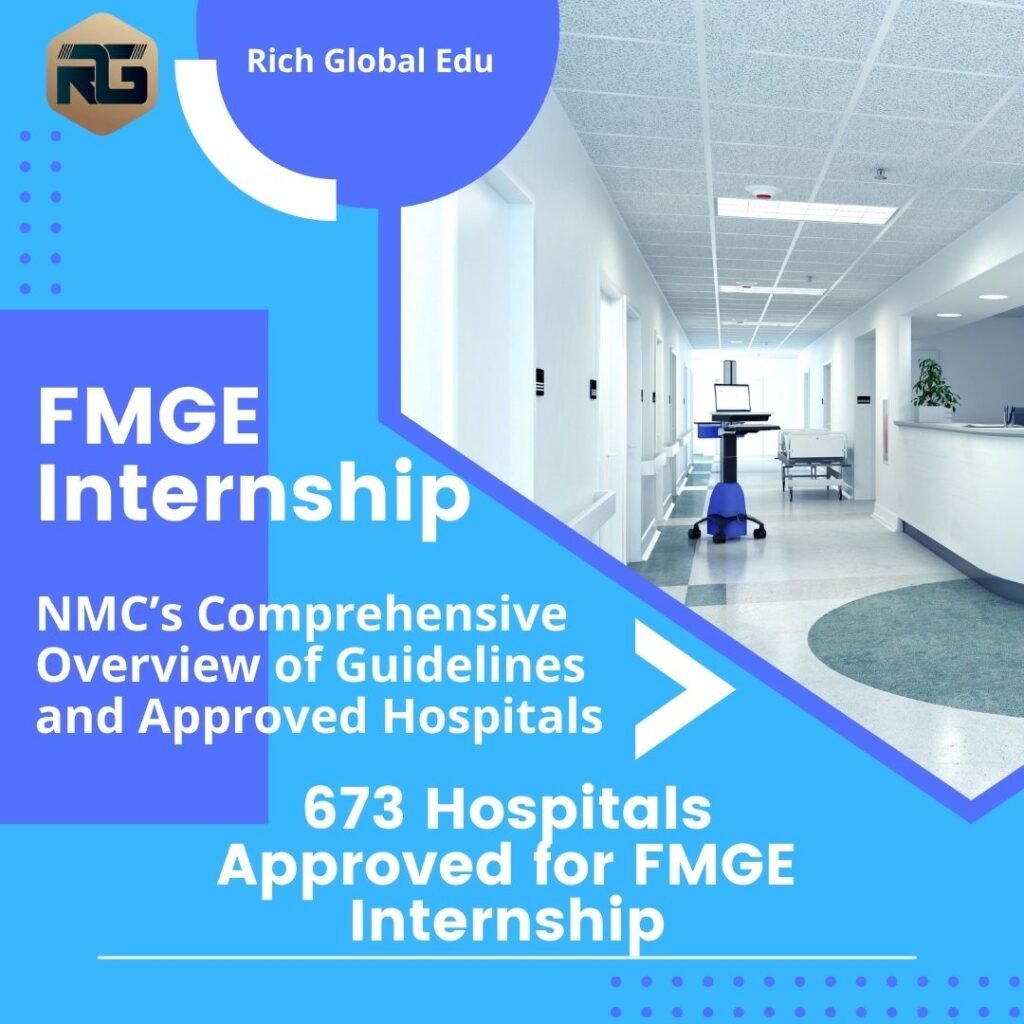
FMGE Internship: NMC’s Comprehensive Overview of Guidelines and Approved Hospitals

FMGE Internship: New Guidelines The National Medical Commission (NMC) has recently issued updated guidelines for Foreign Medical Graduate Exam (FMGE) candidates, allowing them to complete their mandatory internship in 675 approved hospitals across India. These changes aim to streamline the process for foreign medical graduates and ensure they meet the requirements for medical practice in the country. Rich Global Edu_Top Abroad MBBS Consultancy in Chennai, Tamil Nadu, India

FMGE Internship: New Guidelines 


The National Medical Commission (NMC) has recently issued updated guidelines for Foreign Medical Graduate Exam (FMGE) candidates, allowing them to complete their mandatory internship in 673 approved hospitals across India. These changes aim to streamline the process for foreign medical graduates and ensure they meet the requirements for medical practice in the country.


What is an FMGE Internship?


An FMGE Internship is a 12-month supervised clinical training required for FMGs to familiarize themselves with India’s medical standards and practices. Candidates must complete the internship within two years of passing the FMGE or NExT exam to register as medical practitioners in India.


Key FMGE Internship Guidelines Issued by NMC


Internship Duration

Standard internship: 12 months.

Exceptional cases (e.g., COVID-19 or Russia-Ukraine war): 24 months.


Time Frame


The internship must be completed within 2 years after passing the FMGE or NExT exam.


Fee Structure


No fees for internships.

Equal access is ensured for all FMGs.


Stipend


FMG interns receive a stipend equivalent to Indian interns, as determined by state authorities.

For a two-year internship, stipends are provided only during the second year.


Hospital Selection


FMGs can complete internships at teaching and non-teaching hospitals.

State Medical Councils assign hospitals based on availability.


State Domicile Policy


FMGs are not restricted by state domicile rules and can complete internships anywhere in India.


Key Highlights of the New Guidelines


Internship Completion in India


Foreign medical graduates (FMGs) can now complete their internship at one of the NMC-approved hospitals. This measure ensures uniformity in training and enhances the quality of medical professionals entering the workforce.


List of Approved Hospitals


The NMC has approved 675 hospitals nationwide for FMGE internships. The list includes a mix of government and private institutions, ensuring ample opportunities for candidates in various states.


Eligibility for Internship


FMGs must clear the FMGE screening test conducted by the National Board of Examinations (NBE).

Candidates must provide all necessary documentation, including degree certificates from recognized foreign universities.


Stipend and Working Conditions


The NMC guidelines mandate that FMG interns receive a stipend comparable to that of Indian medical graduates undergoing internships. Working hours, duties, and responsibilities must also adhere to standard norms.


Duration and Scope


The internship duration is typically one year, covering essential clinical rotations in departments like medicine, surgery, pediatrics, and obstetrics & gynecology. This training ensures FMGs gain comprehensive exposure to medical practices in India.


Compliance with NMC Regulations


Hospitals hosting FMG interns must comply with NMC regulations to maintain training quality. Periodic assessments may be conducted to ensure adherence.


Importance of the Guidelines


These updated guidelines offer greater clarity and support for FMGs transitioning to practice in India. By standardizing internship opportunities, the NMC aims to address the challenges FMGs previously faced in finding suitable placements and ensuring their training aligns with Indian medical standards.


Two-Year FMGE Internship


Applicable to FMGs affected by COVID-19 or the Russia-Ukraine War.

Candidates who were in their final MBBS year can complete an extended two-year internship.

The second year compensates for missed clinical training and must be undertaken at NMC-approved hospitals.


Next Steps for FMGs


Check the Approved List: FMGs should review the list of 675 approved hospitals to identify suitable options.

Prepare Documentation: Ensure all required documents, including FMGE test results and degree certificates, are in order.

Apply for Internships: Contact approved hospitals and follow the application process for securing an internship slot.


FMGE 2025 Examination Details

  • Exam Dates: June (4th week) and December (3rd week).
  • Mode: Online, 300 questions, no negative marking.
  • Eligibility: Medical degrees from recognized foreign institutions.
  • Application Fee: ₹7,080.
  • Results: July (June session) and January (December session).

FMGE Internship: List of Approved Hospitals


Foreign Medical Graduates (FMGs) must complete a Compulsory Rotating Medical Internship (CRMI) as part of their eligibility to practice medicine in India. The National Medical Commission (NMC) has issued detailed guidelines and approved 673 hospitals across India for this purpose.


The full list of hospitals approved for FMGE internships by the National Medical Commission (NMC), as per the available data, includes 673 hospitals across states and union territories in India. Below is the distribution of hospitals:

S.No

State/Union Territory

Number of Hospitals

1

Andaman and Nicobar Island

1

2

Andhra Pradesh

30

3

Assam

21

4

Bihar

29

5

Delhi

21

6

Gujarat

49

7

Himachal Pradesh

6

8

Madhya Pradesh

45

9

Kerala

20

10

Maharashtra

74

11

Karnataka

62

12

Tamil Nadu

40

13

Odisha

17

14

Punjab and Haryana

42

15

Jammu and Kashmir

2

16

Rajasthan

62

17

Uttar Pradesh

72

18

Nagaland

1

19

Tripura

1

20

West Bengal

33

21

Dadra and Nagar Haveli

1

22

Daman and Diu

1

23

Manipur

1

24

Military Hospitals

15

25

Railway Hospitals

27

Total Hospitals: 673

MBBS in Nepal Pose Challenges for Indian Students Under FMGL Regulations 2021

As Nepal begins its counseling rounds for MBBS admissions, Indian aspirants are being cautioned about significant regulatory gaps that could hinder their ability to practice in India. Experts warn that Nepal’s medical education system does not fully comply with the Foreign Medical Graduate Licentiate (FMGL) Regulations, 2021, established by India’s National Medical Commission (NMC). This raises uncertainty for Indian students enrolling in Nepalese medical colleges post-2021.

Licensing Concerns for Indian Students

The Nepal Medical Council (NMC) recently clarified that international students are not granted licenses equivalent to native Nepalese practitioners. Many Indian students seeking admission to private medical colleges in Nepal remain unaware of these licensing challenges, leading to potential difficulties in registering as doctors in India. Without an official list of compliant countries, approximately 700 to 900 Indian students pursuing medical education in Nepal annually risk regretting their decision.

A Student’s Struggle

One Indian student, who wished to remain anonymous, shared their ordeal: “In 2022, I enrolled in a private medical college in Nepal, paying nearly 40% of the total fees. Initially, the Nepal Medical Council assured us of licensing rights, but in April 2023, a circular in the National Gazette revealed that such provisions were not available to international students. This shattered my dreams of becoming a doctor. Despite spending nearly ₹20 lakhs, my family and I were left financially drained, and I had no option but to abandon my course.”

Conflicting Assurances

On October 17, 2024, the Association of Private Medical & Dental Colleges of Nepal issued a circular assuring international students of eligibility for registration upon returning to their home countries. It stated that foreign students would be registered with the Nepal Medical Council during their studies and allowed to appear for the licensing exam. However, critics argue this assurance lacks legal backing, further complicating the situation.

Expert Warnings

Dipender Chaubey, a study-abroad counselor, highlighted how some private colleges in Nepal mislead students and parents about licensing regulations. “Agents in India and Nepal exploit students by promoting false claims. Although international students may take licensing exams in Nepal, they cannot secure a permanent practicing license equivalent to Nepalese graduates,” Chaubey explained. He warned that current batches of Indian students in Nepal might face repercussions once they complete their education.

NMC’s Official Stand

India’s National Medical Commission refuted the association’s claims through an official circular. The NMC emphasized that while foreign graduates can apply for registration under its regulations, they will not be treated on par with native Nepalese practitioners. Section 21(f) of Nepal’s medical regulations requires international graduates to produce a “good standing certificate” issued by their home country. However, India’s NMC clarified it cannot issue such certificates to students who graduate from Nepalese colleges.

The Path Ahead

As regulatory challenges persist, experts urge Indian aspirants to thoroughly research licensing requirements before enrolling in medical programs abroad. For many, the lack of clarity and compliance with FMGL Regulations 2021 has already resulted in significant financial and emotional setbacks.

Source: Times of India

Which is the Best Country for MBBS Abroad? A Comprehensive Guide Under NMC Norms 2021

Pursuing MBBS abroad has become a popular choice for many Indian students. However, the decision of which country is best depends on several factors, especially since the introduction of the National Medical Commission (NMC) Guidelines 2021. These guidelines have outlined specific requirements for medical education abroad, ensuring that Indian students receive quality education that aligns with Indian standards.

In this blog, we’ll explore the best countries for MBBS abroad based on the NMC norms, costs, education quality, and other crucial factors.

NMC Norms 2021: Key Highlights

Before choosing a country, it is essential to understand the NMC’s regulations for foreign medical graduates:

  1. Duration of Course: The MBBS course must be at least 54 months (4.5 years), followed by a 12-month internship.
  2. Medium of Instruction: The course must be taught entirely in English.
  3. Internship Requirement: Students must complete a 12-month internship in the same country where they pursue their MBBS.
  4. Eligibility for Licensing: The foreign degree must be recognized in the country of study, and the graduate should be eligible to practice medicine there.
  5. Subjects Covered: The curriculum should cover all major subjects required for MBBS, similar to those taught in Indian medical colleges.
  6. Exit Exam: Graduates must pass the FMGE or NExT exam to practice medicine in India.

Choosing Countries for MBBS Abroad Based on Course Duration

Choosing a country for MBBS abroad based on the course duration can significantly aid in career planning. Opting for a country with a shorter course duration allows you to complete the program sooner, providing additional time to prepare for FMGE or NExT and undertake clinical rotations in India. It also ensures that you finish the entire MBBS abroad process within 10 years from the date of enrollment, aligning with the important guideline established by the NMC in 2021 for foreign medical graduates.

Internship Requirements

As per the NMC 2021 guidelines for MBBS abroad, an additional internship of 1 year must be completed in the country of study, apart from the course duration.

What is the Duration of MBBS Abroad (Including Internship)

  1. MBBS in India: 4.5 years + 1 year clinical rotation.
  2. MBBS in Russia: 6 years course + 1-year additional internship.
  3. MBBS in Georgia: 6 years course + 1-year additional internship.
  4. MBBS in Kazakhstan: 6 years course + 1-year additional internship.
  5. MBBS in Vietnam: 6 years course + 1.5 years additional internship.
  6. MBBS in Uzbekistan: 6 years course + 1-year additional internship.
  7. MBBS in Bangladesh: 6 years course + 1-year additional internship.
  8. MBBS in Kyrgyzstan: 5 years course + 1-year additional internship.
  9. MBBS in Nepal: 4.5 years + 1-year internship.

Best Countries for MBBS Abroad

1. Bangladesh

  • Why It’s Recommended:
    • The MBBS syllabus is almost identical to that of Indian medical colleges.
    • Clinical exposure to diseases similar to India.
    • Affordable tuition fees and living costs.
  • Duration: 6 years + 1 year internship.
  • Language: English.
  • Approximate Cost: INR 30-40 lakhs (total).

2. Uzbekistan

  • Why It’s Recommended:
    • Government universities with high-quality education.
    • Affordable fees and living expenses.
    • Close proximity to India with easy travel.
  • Duration: 6 years + 1 year internship.
  • Language: English.
  • Approximate Cost: INR 25-35 lakhs (total).

3. Kyrgyzstan

  • Why It’s Recommended:
    • One of the most affordable options for Indian students.
    • Recognized medical universities with good infrastructure.
    • Large Indian student community.
  • Duration: 5 years course + 1-year additional internship.
  • Language: English.
  • Approximate Cost: INR 20-30 lakhs (total).

4. Russia

  • Why It’s Recommended:
    • High-quality education with state-of-the-art facilities.
    • Globally recognized degrees.
    • Opportunity to learn an additional language (Russian).
  • Duration: 6 years course + 1-year additional internship.
  • Language: English in select universities.
  • Approximate Cost: INR 25-40 lakhs (total).

5. Georgia

  • Why It’s Recommended:
    • European education standards with modern facilities.
    • Recognized by NMC and WHO.
    • Safe and welcoming environment for international students.
  • Duration: 6 years course + 1-year additional internship.
  • Language: English.
  • Approximate Cost: INR 35-50 lakhs (total).

Factors to Consider When Choosing a Country

  1. NMC Recognition: Ensure the university is recognized by NMC.
  2. Cost: Include tuition fees, living expenses, travel, and other costs.
  3. Language Barrier: Prefer countries where English is the primary medium of instruction.
  4. Climate: Consider the weather conditions and how well you can adapt.
  5. Clinical Exposure: Look for countries with good hospitals and practical training opportunities.
  6. FMGE/NExT Pass Rate: Research the success rates of graduates from your chosen country.

Why Following NMC Norms Matters

Choosing a university or country that doesn’t comply with NMC norms can have severe consequences:

  • Your degree might not be valid in India.
  • You may face difficulties in passing the FMGE/NExT exam.
  • Additional expenses for compliance (e.g., extra internships in India).

To avoid such issues, always consult with trusted educational consultants and cross-check the NMC-approved list of universities before applying.

Conclusion

The best country for MBBS abroad depends on your budget, career goals, and preferences. Bangladesh, Uzbekistan, Kyrgyzstan, Russia, and Georgia are some of the top choices for Indian students under NMC norms. Each country has its advantages, but ensuring compliance with the NMC Guidelines 2021 should be your top priority.

If you need further guidance or assistance in choosing the right country, feel free to reach out to a trusted education consultancy to simplify your journey.

Which is the Best Country for MBBS Abroad? A Comprehensive Guide Under NMC Norms 2021

Study Abroad. Get Licensed. Go Global.

Book your Free Counselling

About Us

Business Legal Name

RICH GLOBAL

Quick Links

Countries for MBBS Abroad

Top Universities for MBBS

FAQs

Best Countries for Studying MBBS Abroad

MBBS in Moldova

MBBS in Nepal

MBBS in USA

© 2024 Rich Global Edu

error: Content is protected !!